
St PetersCE Primary School
Oracy
'Without language, one cannot talk to people or understand them; one cannot share their hopes and aspirations, grasp their history, appreciate their poetry, or savour their songs.' - Nelson Mandela
At St Peter’s, we believe that talk is fundamental to learning. Children learn through talking, listening, questioning, explaining and discussing, and we deliberately create a talk-rich environment across the whole school.
Our aim is for every pupil to become a confident, articulate and thoughtful communicator who can express their ideas clearly, listen carefully to others and participate meaningfully in discussion. Oracy is therefore not taught as something separate from the curriculum; it is woven through every subject and throughout school life.
Talk in every lesson
Across the curriculum, pupils are given regular opportunities to talk, rehearse ideas and learn from one another. We have high expectations for how pupils communicate and explicitly teach the behaviours and language they need to participate successfully.
Talk scaffolds
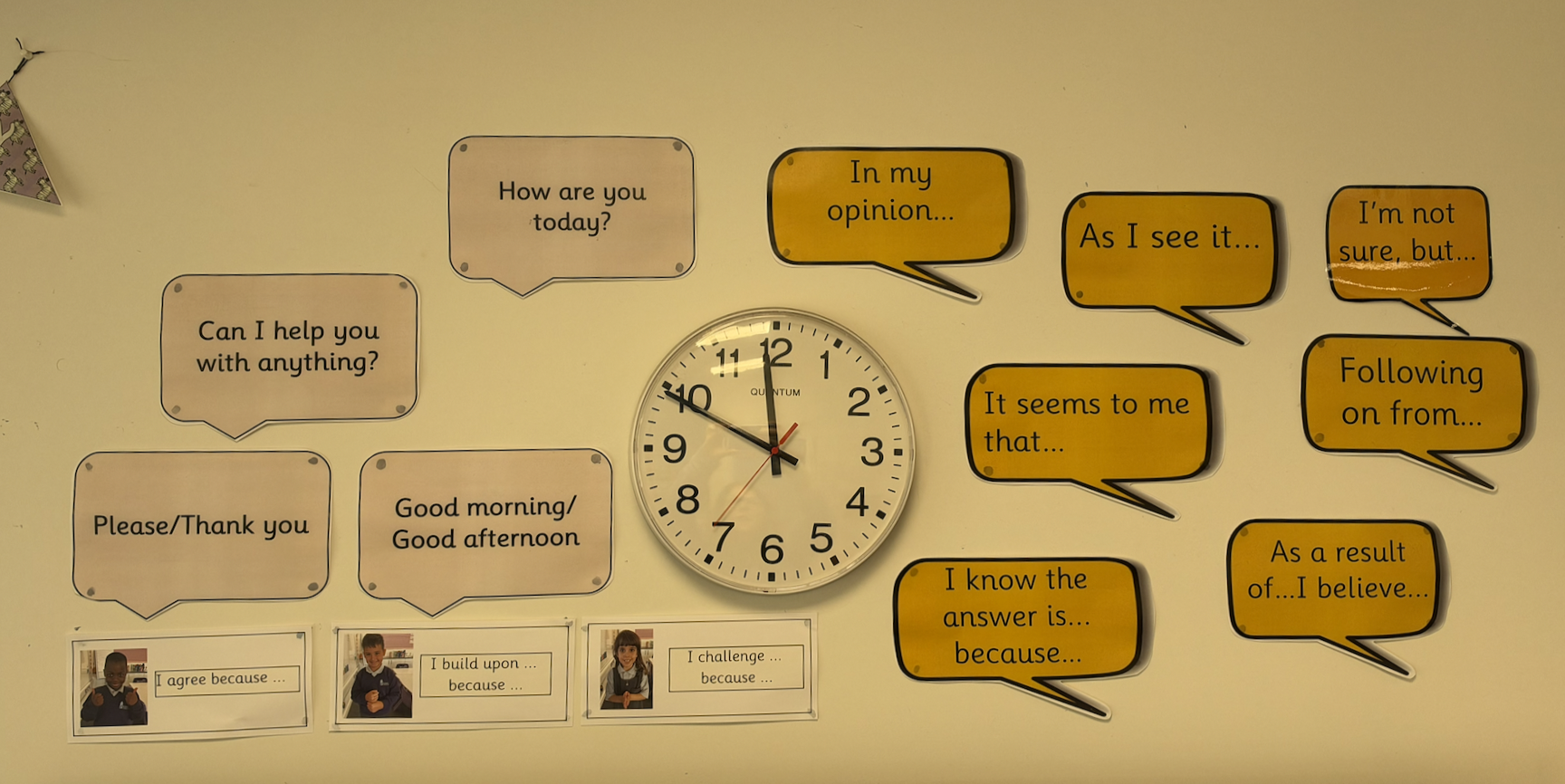
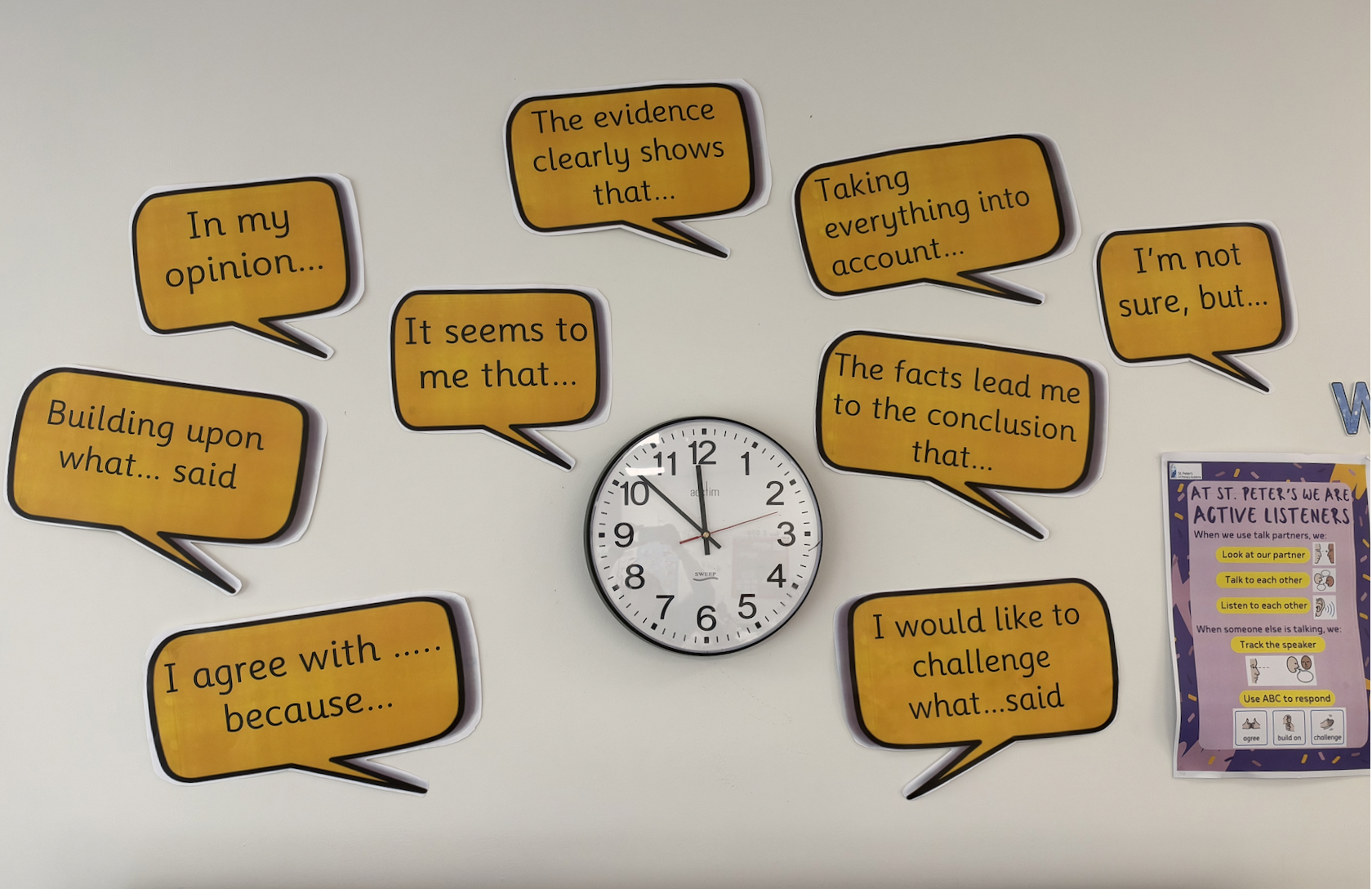
We provide children with talk scaffolds and sentence stems to help them structure their ideas and speak in full sentences. These might include phrases such as “As I see it…”, “Following on from…” and “I agree because…”. As pupils become more confident, talk scaffolds become increasingly sophisticated, supporting children to use more precise, complex and subject-specific language. For example, pupils may progress from “I believe…” to sentence stems such as “Having analysed the evidence…” or “Having pondered the different viewpoints…”.
Partner talk
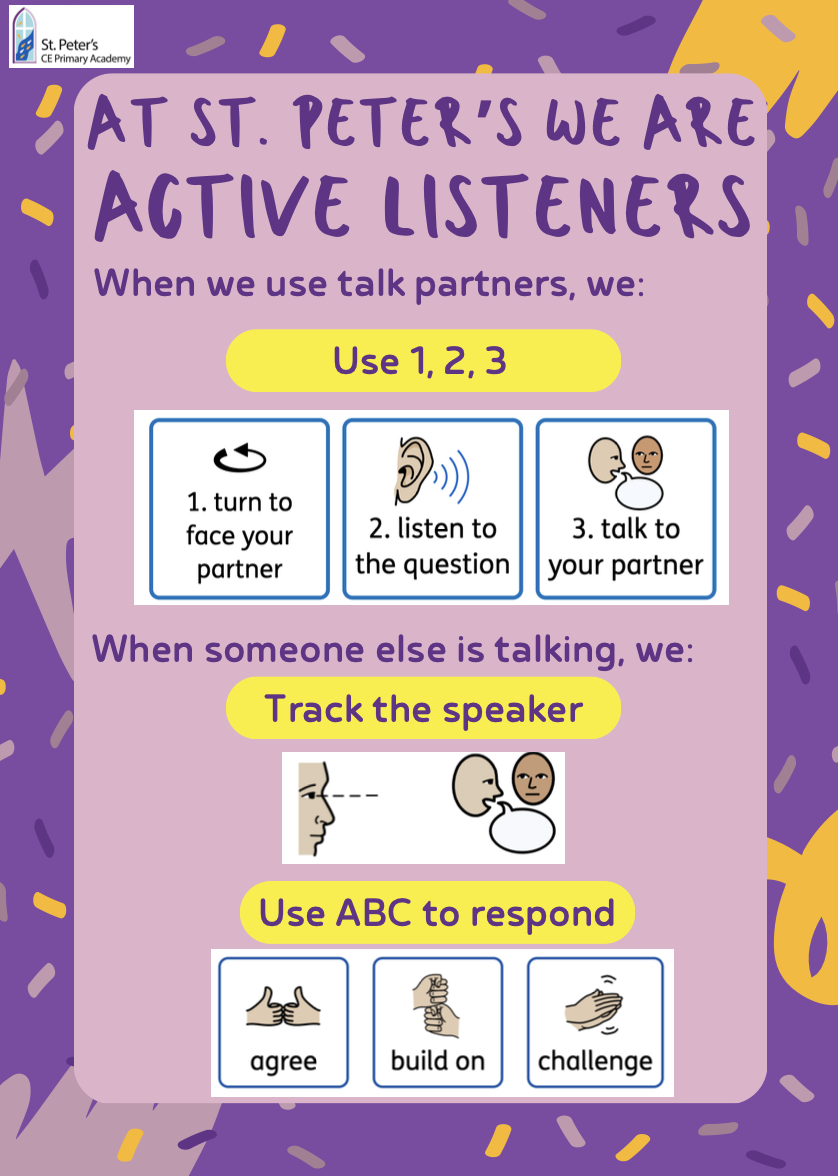
Partner talk is a regular feature of lessons. Children are explicitly taught how to work with a talk partner, including turning to face their partner, listening carefully and taking turns to speak. Regular opportunities to rehearse an idea with a partner help pupils to develop their thinking and build confidence before sharing with a wider audience.
Active listening
We teach children that being a good communicator is about listening as well as speaking. Pupils are expected to track the speaker and respond actively to what others say. We use simple hand gestures to show whether pupils agree, disagree or want to build on an idea, helping every child to engage with the contributions of others.
100% participation
We believe every child should have a voice. We expect 100% participation in lesson discussions, ensuring that all pupils have opportunities to contribute rather than relying on the same confident speakers.
Teachers use strategies such as cold calling to involve everyone, while creating a supportive environment where it is safe not to know. Children are encouraged to respond with phrases such as “I’m not sure, but…” so that they understand that having a go, sharing an idea and learning from mistakes are all important parts of classroom talk.
Developing confident communicators
Pupils develop their oracy skills through a range of opportunities across the curriculum. They are encouraged to explain their thinking, justify their ideas, ask questions, challenge respectfully and respond to the ideas of others.
Talk is particularly important when pupils are exploring new concepts. Children may discuss a problem before solving it in maths, explain their reasoning in science, debate different perspectives in history or rehearse vocabulary and ideas before writing in English.
We use drama regularly in English to help children explore characters, settings and ideas, rehearse language and develop confidence. Pupils also have opportunities to develop presentational talk, speaking clearly and confidently to an audience.
Dedicated oracy opportunities
Alongside the opportunities embedded throughout the curriculum, pupils take part in regular discrete oracy lessons, particularly within English. These include activities such as debates, presentations and structured discussions, where children explicitly practise the skills needed to communicate effectively.
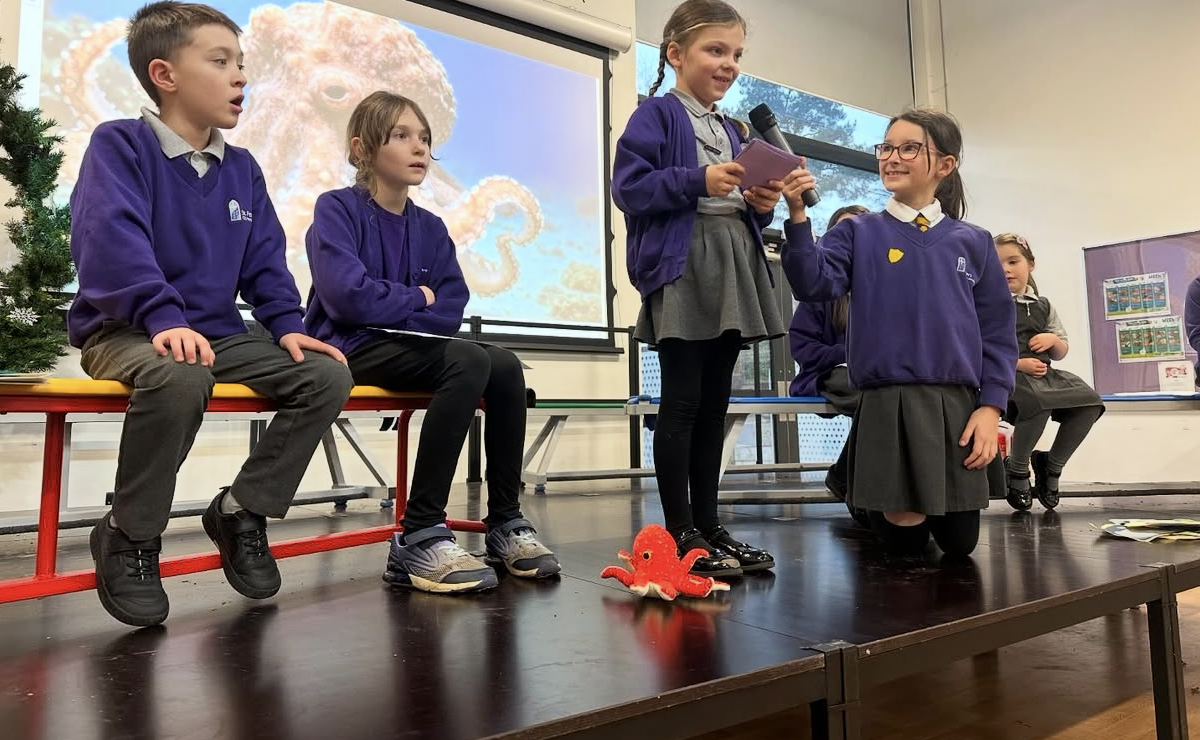
Throughout the year, pupils can also take part in speech and poetry competitions, giving them the opportunity to prepare, perform and present to an audience. These experiences develop confidence, expression and the ability to adapt their voice and delivery for different purposes.
Where does it take us?
By the time pupils leave St Peter’s, we want them to be confident speakers, attentive listeners and thoughtful participants. They should be able to communicate their ideas clearly, listen respectfully to different viewpoints and adapt their language for different audiences and purposes.
Most importantly, we want every child to feel that their voice matters and that they have the confidence and skills to use it.