
St PetersCE Primary School
Computing
‘Everyone should know how to program a computer because it teaches you how to think.’ – Steve Jobs
Curriculum Intent
St Peter’s is committed to matching the pace of an ever-changing world by constantly keeping abreast of technological innovation and cutting-edge thinking. As a school community we passionately believe that Computing is a key skill for children to learn and that providing a high-quality Computing education will enable them to become effective, thriving digital citizens with the skills required for jobs of the future.
Computing lessons at St Peter’s are skilfully designed so as to not only give children a wide range of technological experiences but also teach them the key skills they need to explore in order to use new or unfamiliar technologies. Children will be taught the specifics of different programs; however, underpinning every lesson, is a focus on planning, designing, problem-solving and evaluating. These skills will therefore become second nature and easily transferable throughout their time at St Peter’s to all new learning.
Our Digital Mindset
At St Peter’s, we want our children to develop more than just digital skills. We want them to become confident, responsible and adaptable users of technology who can think critically, solve problems and use technology creatively.
Our Digital Mindset is built around four key areas:

Responsible Users
Children learn to use technology safely, responsibly and respectfully. They understand how to protect their personal information, behave positively online and consider how their digital choices can affect themselves and others.
Analytical Thinkers
Children learn to break problems down into manageable steps and develop clear instructions to solve them. They use logical thinking to create, test and improve programmes, identify errors and persevere when things don't work the first time.

Creative Designers
Children use technology creatively to communicate, express ideas and solve problems. They learn to plan, create and evaluate digital content, experimenting with different tools to design effective and innovative solutions.
Resilient Explorers
Children build on what they already know to explore new technologies with curiosity and confidence. They learn from mistakes, adapt their approach when things don't work and evaluate digital tools and information to make informed choices.
Through our Digital Mindset, we aim to develop children who are safe and responsible, curious and creative, logical and resilient – ready to use technology effectively both in school and beyond.
Curriculum Design
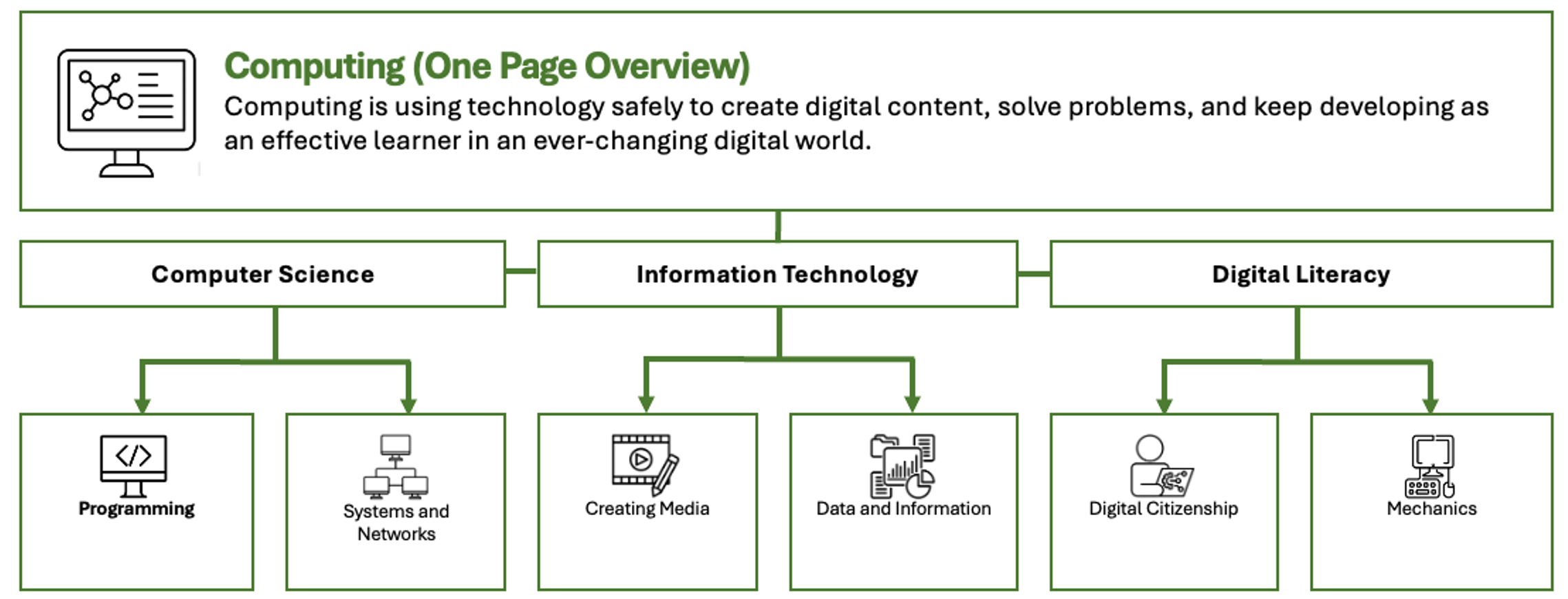
The overarching aim for Computing at St Peter’s is for children to develop key computing skills and be able to transfer these skills to a range of technologies. Our computing curriculum is built around key questions, encouraging children to explore, investigate and apply their knowledge as they develop their understanding.
Each sequence of lessons builds towards a final product or outcome, giving children the opportunity to apply their skills to solve a problem or achieve a specific purpose. We want our children to be excited and curious about new technology, while also developing the confidence and resilience to use, explore and evaluate it effectively to enhance their learning.
Each unit of our Computing curriculum falls into one of three key areas. Across these units, children develop their computing knowledge and skills through purposeful projects, applying what they have learned to create, solve problems and communicate their ideas.
Programming
Children learn how to give computers clear instructions to achieve a desired outcome. They develop their ability to create, test and debug programmes, using logical thinking to solve problems and make improvements.

Creating Media
Children learn how technology can be used to create, edit and communicate ideas. They develop skills in creating a range of digital content, selecting appropriate tools and making choices about how best to present their ideas.
Data and Information
Children learn how data can be collected, organised, represented and interpreted. They explore how digital tools can help us to make sense of information and communicate it effectively.
Digital Citizenship
Digital Citizenship is at the heart of every Computing lesson. We begin each lesson with a short Digital Citizenship activity, ensuring that children regularly develop their understanding of how to use technology safely, responsibly and respectfully. This includes considering our behaviour online, protecting personal information and thinking about the impact of our digital choices.
Mechanics and Systems and Networks
Alongside our main Computing units, we teach Mechanics and Systems and Networks throughout the year. These areas are woven into our Computing lessons to ensure that children develop a broad understanding of how technology works, from the devices and systems they use to the networks that connect them.