St PetersCE Primary School
Handwriting and Spelling

Our Intent
At St. Peter’s, we believe that fluent, legible handwriting is essential for effective writing. When children develop automatic letter formation, they can focus their attention on spelling, composition and communicating ideas, rather than the physical act of writing.
Our approach ensures that pupils develop accuracy, fluency and pride in presentation through systematic teaching and regular practice.
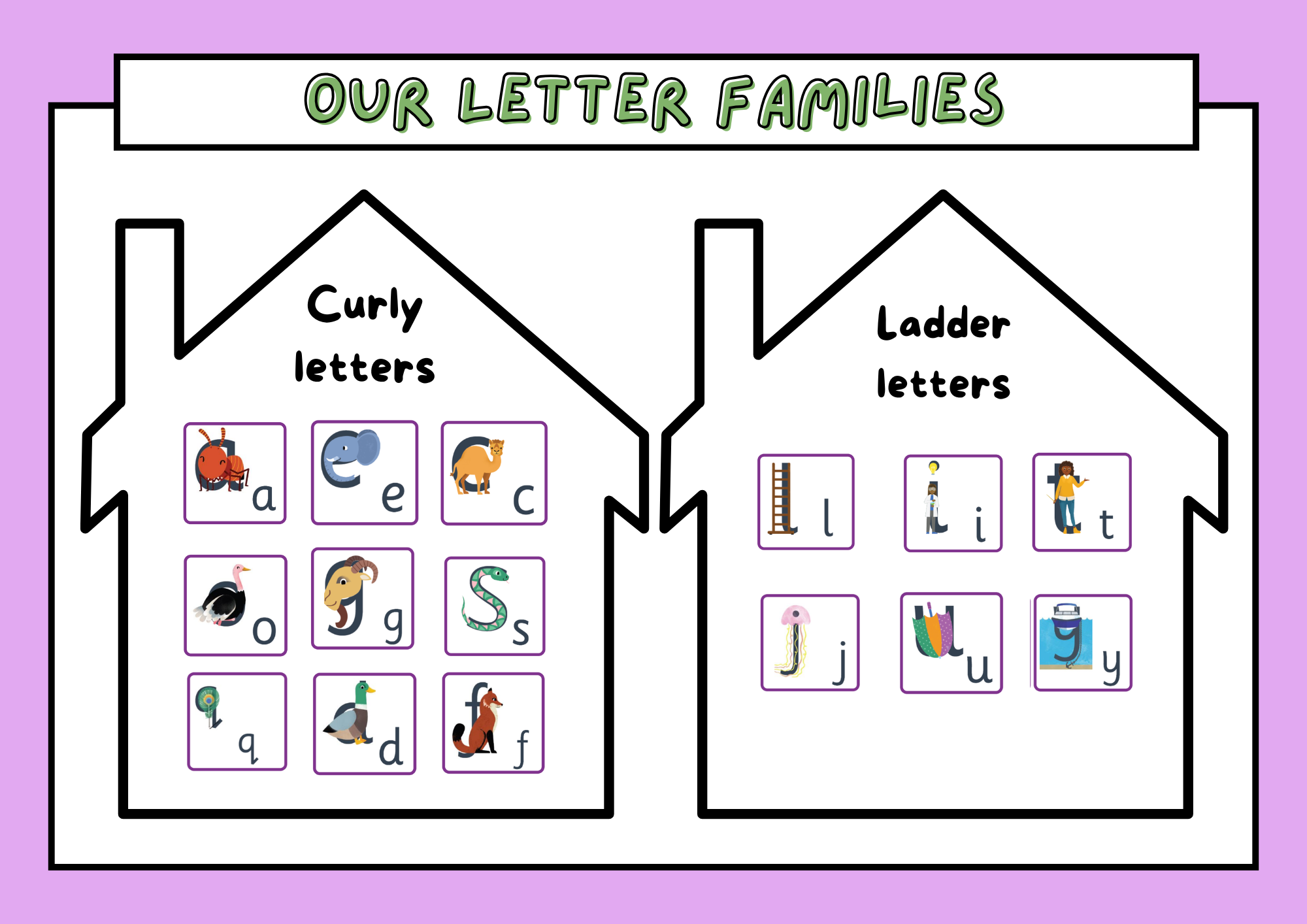
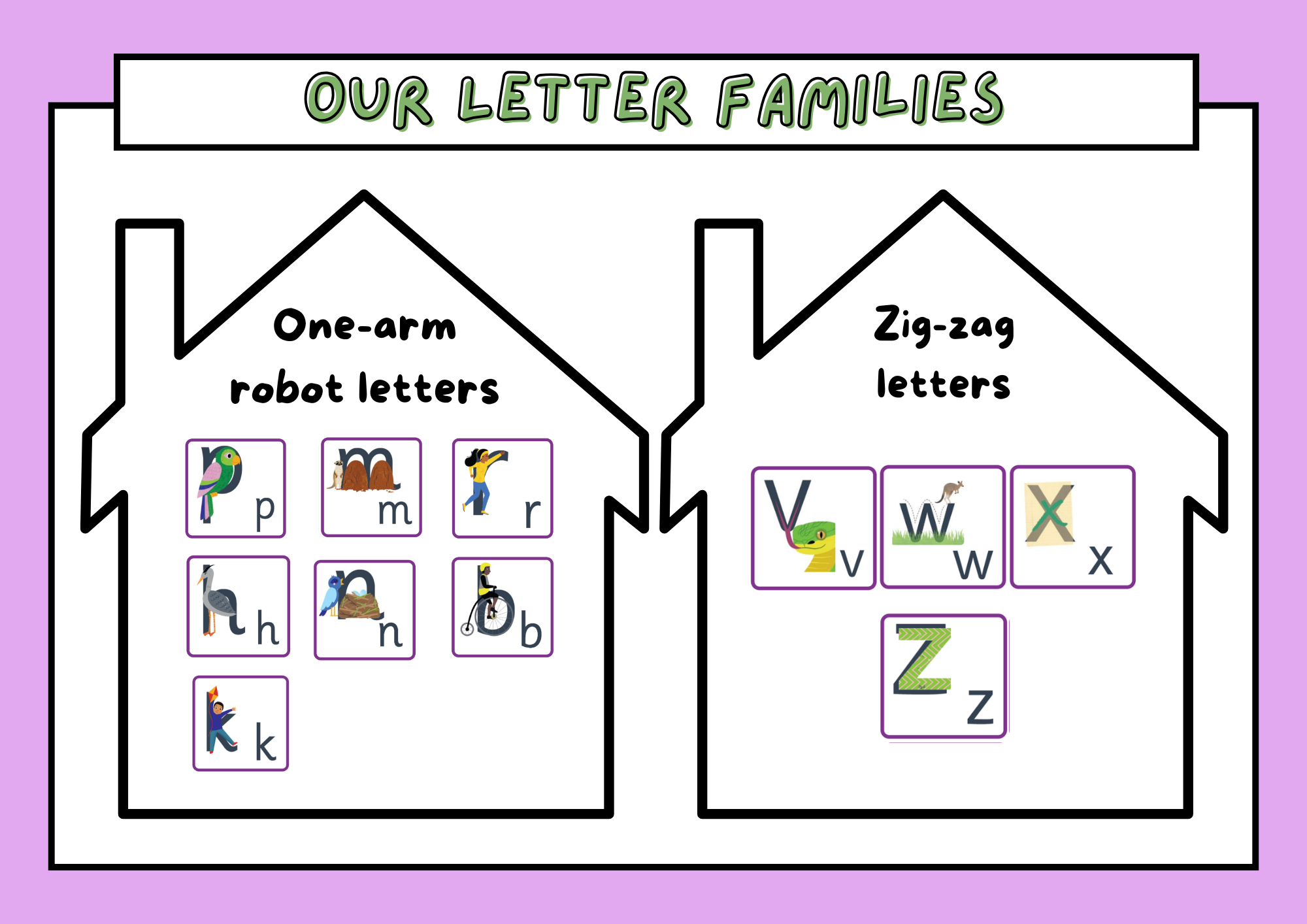
Children begin to learn the cursive style in Yr 2. When this is introduced will depend upon the cohort although all children (with the exception of children with additional needs) will be using the cursive style by the end of the year. When a child is deemed to have legible, joined writing for a sustained period they will be encouraged to use a pen. Indeed our aim is that all children, by the time they reach Yr. 6, will have received a pen. There are no pen licences or handwriting tests by which to earn one.
Children within KS2 have a twice weekly handwriting lesson which is supplemented with targeted interventions for selected children.
Inclusion
We recognise that some pupils require additional support.
Provision may include:
-
Adapted grips
-
Different sized pencils, writing implements and pencil lead types.
-
Adapted lines
-
Pre-teaching
-
Additional practice
However, expectations remain high for all pupils.
Spelling:
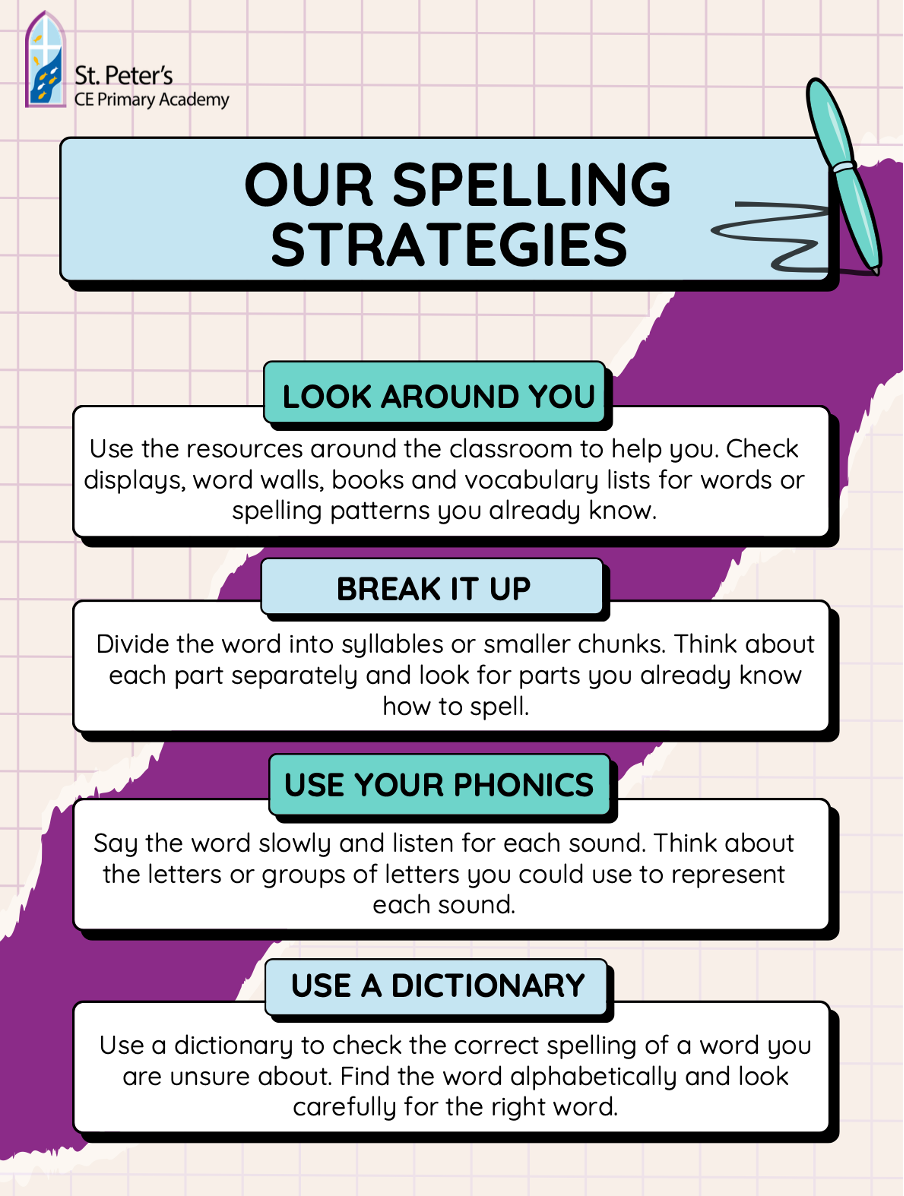
At St. Peter’s, we use Essential Spelling and Word Knowledge, published by Oxford University Press, to teach spelling in Years 3 to 6.
The programme helps children understand how words are constructed and how spelling connects to meaning. Building on their phonics knowledge, pupils explore word structure, spelling patterns and word origins to develop their understanding of the English language.
Children learn about morphology, how meaningful parts, such as roots, prefixes and suffixes, combine to form words, and etymology, which explores where words come from. Making these connections helps children understand both how to spell words and what they mean.
For example, exploring help, helpful, helpless and unhelpful helps children recognise how a shared root can be adapted to create words with different meanings.
Teachers explicitly model spelling knowledge and provide regular opportunities for children to revisit, practise and apply their learning. Assessment, including children’s independent writing, helps us identify gaps and adapt teaching. Children who need additional support receive targeted practice to strengthen their foundations. We expect pupils to apply their spelling knowledge across the curriculum, with increasing accuracy and independence.
Our aim is for children to develop lasting spelling knowledge that they can apply independently, including when they encounter unfamiliar words. Alongside greater spelling accuracy, this approach supports a richer vocabulary and helps children become increasingly confident writers across the curriculum.