
St PetersCE Primary School
Reading
Reading
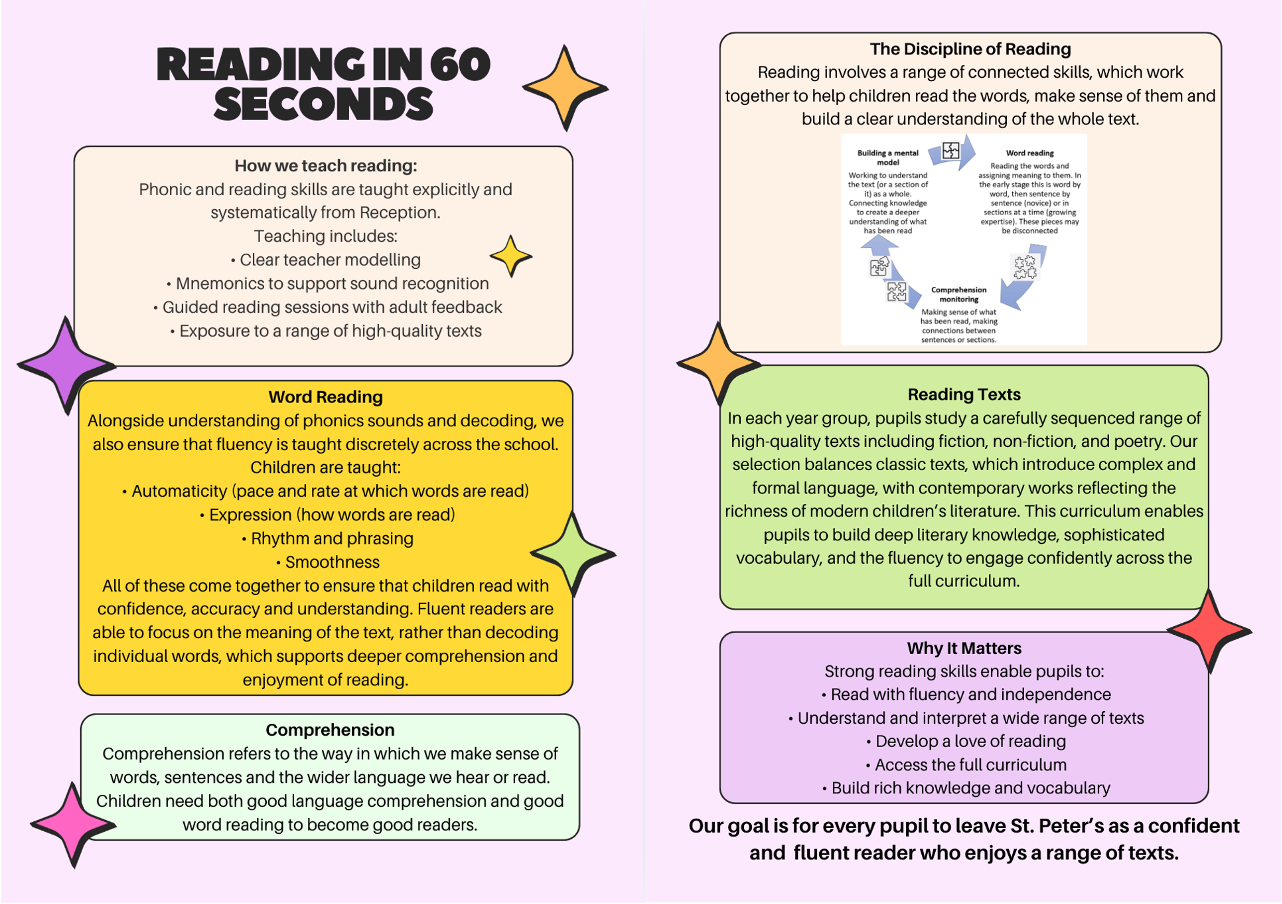
Reading is the foundation of our English curriculum at St Peter’s CE Primary Academy. We aim to develop fluent, confident readers who read widely and with understanding, and who develop a lifelong love of reading.
We encourage pupils to read a wide range of fiction, non-fiction and poetry, enabling them to build knowledge, develop vocabulary and engage with rich and varied literature. Reading is taught through two key components: decoding and comprehension. Pupils are taught to decode through the accurate blending of unfamiliar words and the automatic recognition of familiar words. Alongside this, pupils develop strong comprehension through secure linguistic knowledge, including vocabulary and grammar, as well as an increasing knowledge of the wider world.
Through reading, pupils encounter new ideas, perspectives and experiences, helping to develop their imagination, curiosity and understanding of the world around them.
From Year 2 to Year 6, all pupils participate in four whole class reading sessions each week, where key reading skills are taught explicitly alongside rich discussion of texts. These sessions include opportunities for book talk, vocabulary development, drama and critical discussion, ensuring pupils engage deeply with the texts they study.
We have carefully selected a diverse range of high-quality texts to inspire a love of reading and broaden pupils’ knowledge and understanding of the world. The book spine below outlines the rich collection of fiction, non-fiction and poetry that pupils encounter through our English and guided reading curriculum from Year 2 to Year 6.
Reading Scheme and Home Reading
The school’s main reading scheme is Oxford Reading Tree, which is supplemented by additional high quality texts including Project X and Barrington Stoke. This ensures pupils encounter a wide range of engaging and appropriately challenging texts as they develop as readers.
All children in EYFS, Year 1 and early readers take home fully decodable books that closely match the phonics they are learning in class. This enables pupils to practise and apply their decoding skills with confidence and independence.
Children in Years 2 and 3 remain on the reading scheme to support a smooth transition from phonics based reading to becoming confident independent readers in Key Stage 2. The reading scheme is continually reviewed to ensure pupils have access to books that both challenge and motivate them, helping to develop a sustained love of reading.
Why does my child read the same book more than once?
Re-reading is a crucial part of learning to read fluently. When children read the same text several times, they begin to build what is known as an orthographic map in their memory. This helps them connect the sounds in words with their spelling patterns, enabling them to recognise words automatically rather than decoding them each time.
Decodable books are carefully designed so that children can read every word independently using the phonics they have already learnt. By reading the same book multiple times across the week, children develop accuracy, fluency and confidence, which are essential for strong reading comprehension.
Research shows that children typically need to encounter a word several times before it becomes securely stored in memory. Re-reading therefore plays an important role in helping children move from decoding words to reading fluently and understanding what they read.
School Library
Alongside our reading scheme, St Peter’s has an extremely well-stocked and regularly refreshed school library. The collection is carefully reviewed to ensure it reflects a diverse and inclusive range of authors, themes and perspectives.
Each class visits the library weekly for Book Club and selects new books to take home and enjoy. During Book Club sessions, children share books, listen to a teacher read an excerpt and have the opportunity to choose a reading for pleasure book to take home.
Classroom Libraries
Each classroom contains a carefully curated class library with a range of high-quality fiction, non-fiction and poetry. These collections are regularly refreshed to ensure pupils encounter ambitious and diverse texts, encouraging them to read widely and develop a sustained love of reading. These libraries also contain books that children have previously studied and enjoyed.
Home learning
St Peter’s has high expectations of home reading as set out in the expectations of home learning document. Children must be reading at least five times during the week. Daily reading is incentivised using a whole school reward system. Those children who haven’t read the requisite amount, are read with additionally in school.
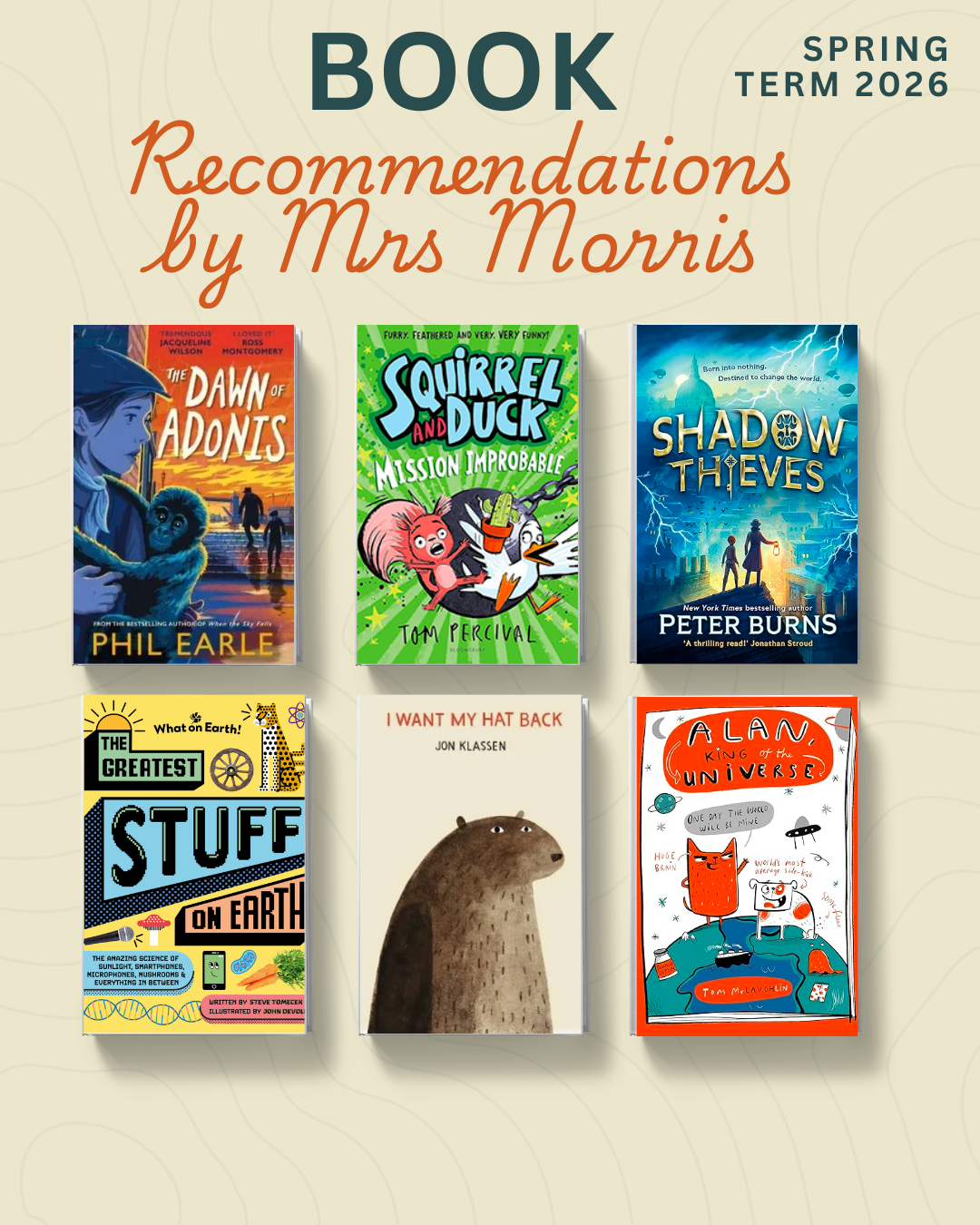
St. Peter's Reading Challenge 2026